Let’s Talk About Lard (The History)
Let's Talk About Lard
Lard and I, we have an uphill battle created by years of misinformation and an overshadowing by our trendy relative tallow.
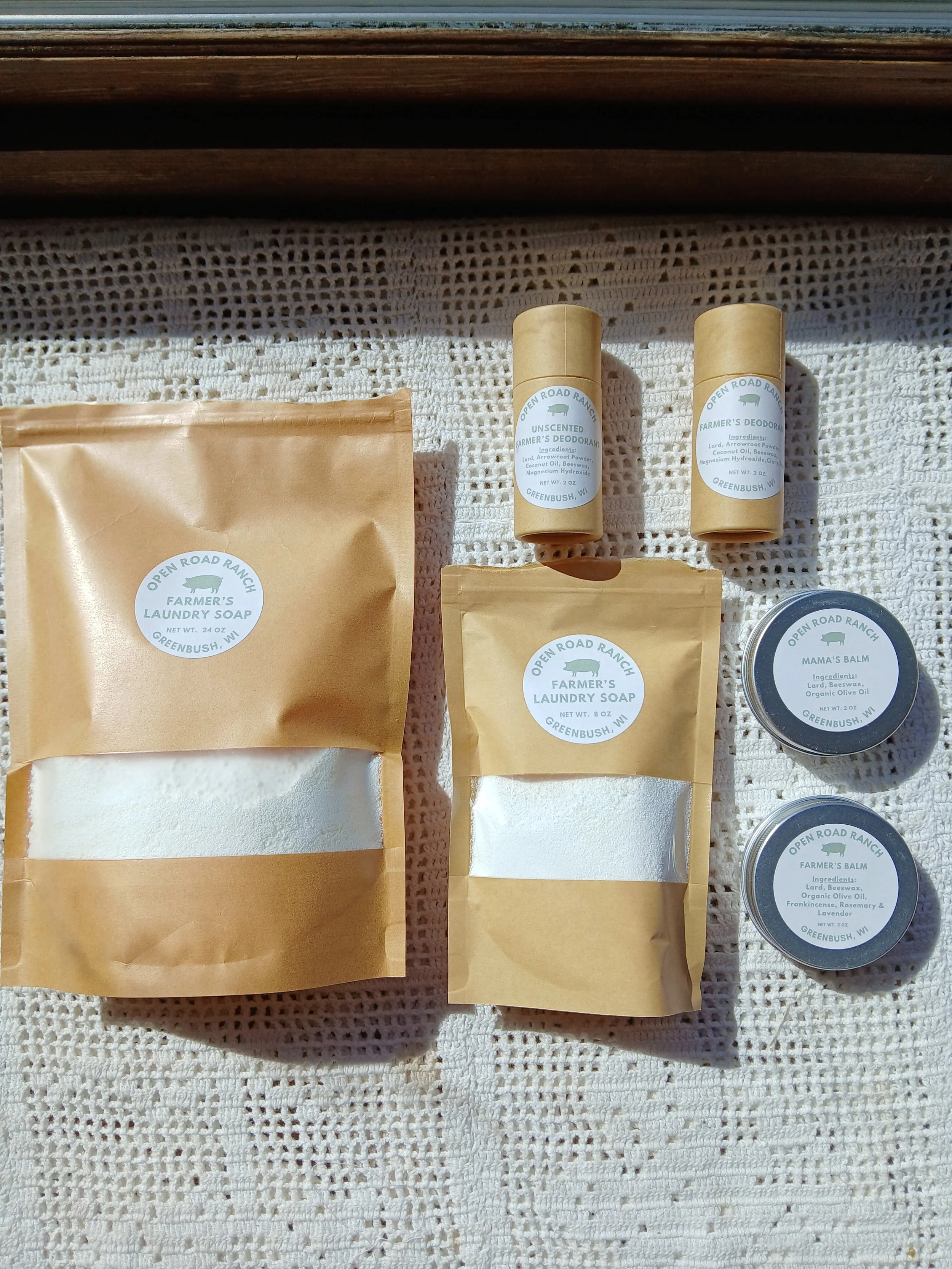
As I have liquid gold rendering away on our stovetop to make our nourishing lard products, I thought I'd take the time to finally share a little bit here with you.
The more I learn about the benefits of lard the more I don't know where to start in sharing all of it.
So I think I'll break this up into parts to not be overwhelming.
So, who's up for a history lesson today?
There's a lot to the story of how lard became villainized.
At markets I'm set up at, inevitably one or two folks will say something along the lines of "but it's bad for us" or "bad for our hearts" and it couldn't be further from the truth.
And I can understand why people would say and think that, after a decades-long, successful campaign against lard and animal fats.
So, let's start with how this came to be. How did something so good for us, and for our skin, come to be so misunderstood?
Lard has been used in cooking and skincare for CENTURIES.
And outside of Crisco's aggressive marketing campaign in America, it stayed a staple in many countries, and is working it's way back in America today, slowly but surely.
A perfect storm of events, vested interests, and dishonest marketing led us to question something our ancestors have trusted and used for ages.
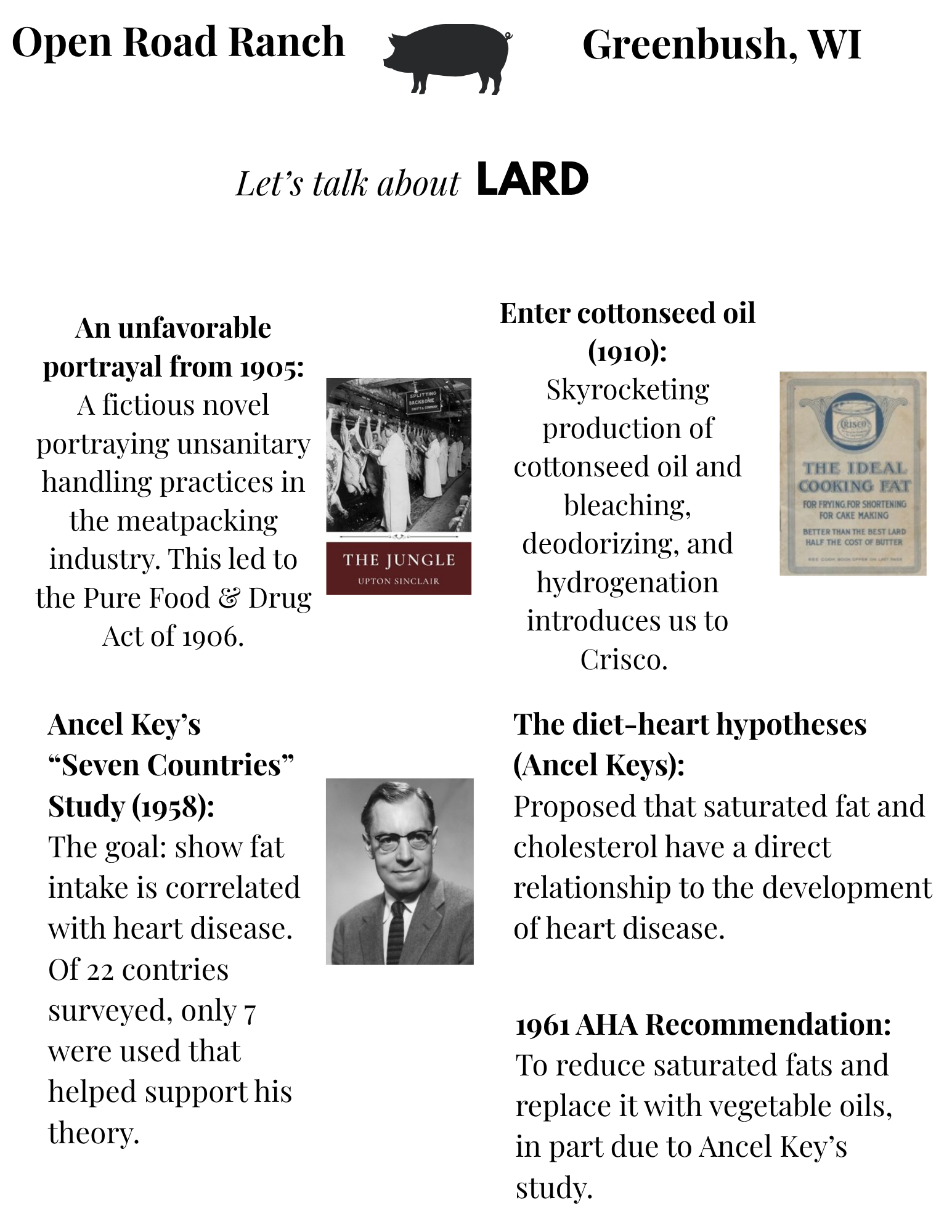
Riding upon the popularity of Upton Sinclair's 1905 novel "The Jungle", which sowed disgust of meat from an unsavory depiction of the meatpacking industry, Crisco arrived on the scene in 1911 after devising a way to use up the surplus cottonseed oil at that time.
Crisco's main goal was to have us believe Crisco was a "healthier alternative to lard".
In 1948 Proctor & Gamble (the makers of Crisco) donated $1.5 million to the American Heart Association.
This influence had direct effects on the AHA's recommendations for our diets, as you'll see.
Along comes Ancel Keys with his "Seven Countries" study in 1958, in which he set out to prove his theory that fat intake correlated with heart disease. He surveyed 22 countries, but only the 7 that helped support his theory made it into the study.
In 1961, the AHA made a formal dietary recommendation to reduce saturated fats (lard, butter, red meat), and replace it with vegetable oils, in part based on Key's study (Keys was on the advisory board curiously enough).
This is a powerful lesson on how influential corporations with vested interests can shape public policy and opinion.
Today, science is vindicating animal fats, but a lot of damage has been done.
Ultimately, it's a powerful lesson on how influential corporations with vested interests can shape public policy and opinion.
This is not a complete overview of the trials and tribulations of lard, but it's the meat and potatoes (so to speak) that I know to share.
I hope this sheds some light on how we got here and I hope I'm doing my part in leading us back to the good stuff.
Now that we've covered a bit about where we've come from, we can talk about lard's benefits in skincare and how similar it is to our own skin another day.
Tell me, what have you known about lard? Is there anything you've known that has changed?